
SuperSTAC:为多目录 STAC 搜索引入别名与离线缓存
近期,Portolan、stac-zap 和 stac-fastapi-collection-discovery 等项目先后探索了跨多个 STAC 目录搜索的不同路径。Portolan 和 stac-zap 基于注册表提供 AI 驱动的搜索能力,而 stac-fastapi-collection-discovery 则在精选数据源索引之上实现了符合 STAC 规范的搜索 API。如今,这一领域迎来了新成员 SuperSTAC,它通过一个统一接口,让用户能够针对自定义编译的 STAC 目录索引进行搜索。
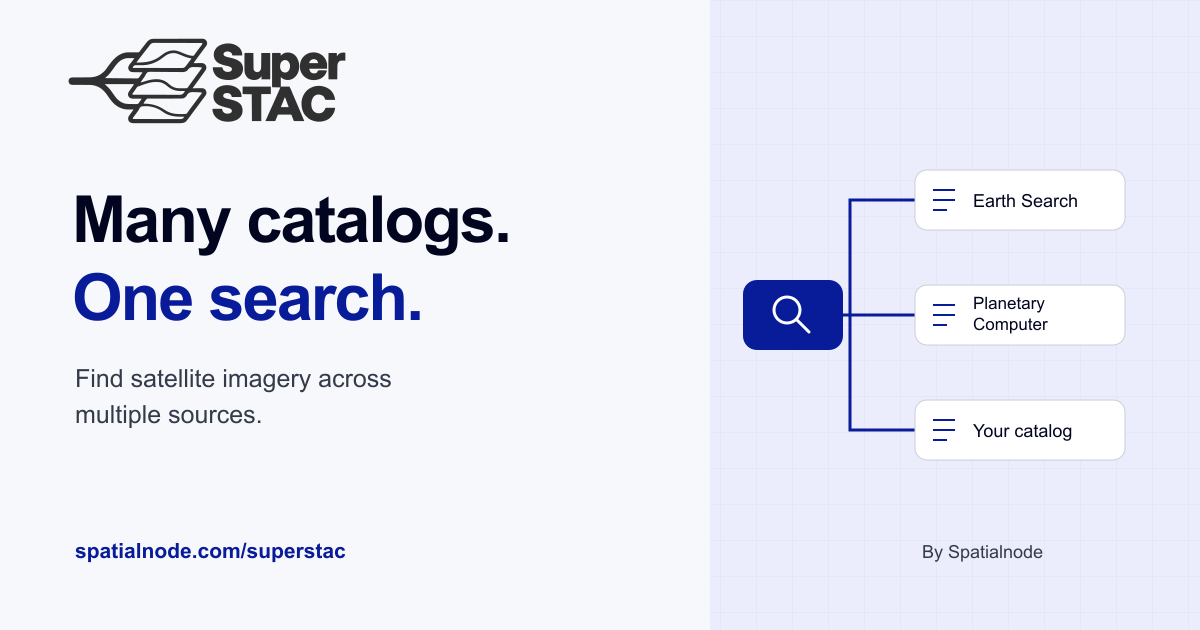
SuperSTAC 的核心理念可以用一句话概括:多个目录,一次搜索。它被定位为依赖 STAC 目录的应用的高可用层,允许用户注册多个目录并通过单一界面进行检索,同时提供了处理目录可用性差异和提供商差异的基础构件。该项目采用 Rust 实现,同时提供 Python API 用于构建自定义应用或 Jupyter Notebook,以及命令行界面,兼顾了性能与易用性。 与前辈们相比,SuperSTAC 增加了两个尤为实用的特性:别名和本地缓存。别名机制直击多目录搜索中的常见痛点——不同目录对同一概念(比如蓝色波段)往往使用不同的名称。用户只需为集合和资产名称指定别名,SuperSTAC 便会在发送搜索请求前将别名翻译为各目录自身的名称,并在返回结果时再映射回用户定义的别名。这一设计让跨目录搜索不再需要记忆各平台的命名规则。 本地缓存功能则允许 SuperSTAC 将搜索结果以 GeoParquet 格式缓存到本地。当重复查询触发目录的速率限制时,或者用户需要在离线环境(例如飞机上)继续工作时,这一特性显得尤为实用。由于省去了网络往返,缓存结果的返回速度也大幅提升。 综合来看,SuperSTAC 堪称目前非 AI 驱动的多目录 STAC 搜索方案中最完整的选择。它并非概念验证,而是一个当下即可投入使用的库。对于需要聚合多个 STAC 目录、又希望避免 AI 方案复杂性的开发者和数据工程师而言,SuperSTAC 提供了一个兼具性能、灵活性和实用性的新选项。 若想了解 SuperSTAC 的完整技术细节、安装方式与使用示例,请点击原文链接查看。
编译自 Lat Long Blog,原文链接
原文摘要
SuperSTAC Adds Aliases and Offline Caching to Multi-Catalogue STAC Search
Link: www.spatialnode.net With Portolan, stac-zap and stac-fastapi-collection-discovery we’ve recently covered various approaches to facilitate searching across several STACT catalogues. Portolan and stac-zap provide AI-driven search against a registry, whereas stac-fastapi-collection-discovery implements a STAC-compliant search API on top of a curated index of data sources. SuperSTAC is the latest addition to this space, providing a unified interface to search against a custom compiled index of STAC catalogues. Emmanuel Jolaiya Ayodele: SuperSTAC is a high availability layer for applications that depend on STAC catalogs. It lets you register multiple catalogs and search them through one interface, while providing the building blocks for handling catalog availability and provider differences. The idea is simple: Many catalogs, One search. Implemented in Rust, SuperSTAC comes with a Python API to build custom applications or Jupyther notebooks, and a command-line interface. And it adds some useful features that its predecessors lack: aliases and local caching. Aliases are for people who don’t remember what name a specific catalogue uses for the blue band (i.e., everyone). Specify aliases for collection and asset names and use them to run a search. SuperSTAC translates your aliases into each catalogue’s own names before sending the search, then maps them back to your aliases in the results SuperSTAC can also cache results locally in GeoParquet. This is particularly handy when repeated queries against a catalogue hit rate limits, or when you want to work on a plane. And cached results also come back much faster, since there’s no network round trip. SuperSTAC looks like the most complete solution for multi-catalogues STAC search that is not AI driven. It’s not just a proof of concept, it’s a library that you can use today.